
How to Spot Damaged Siding Before It Becomes an Expensive Repair
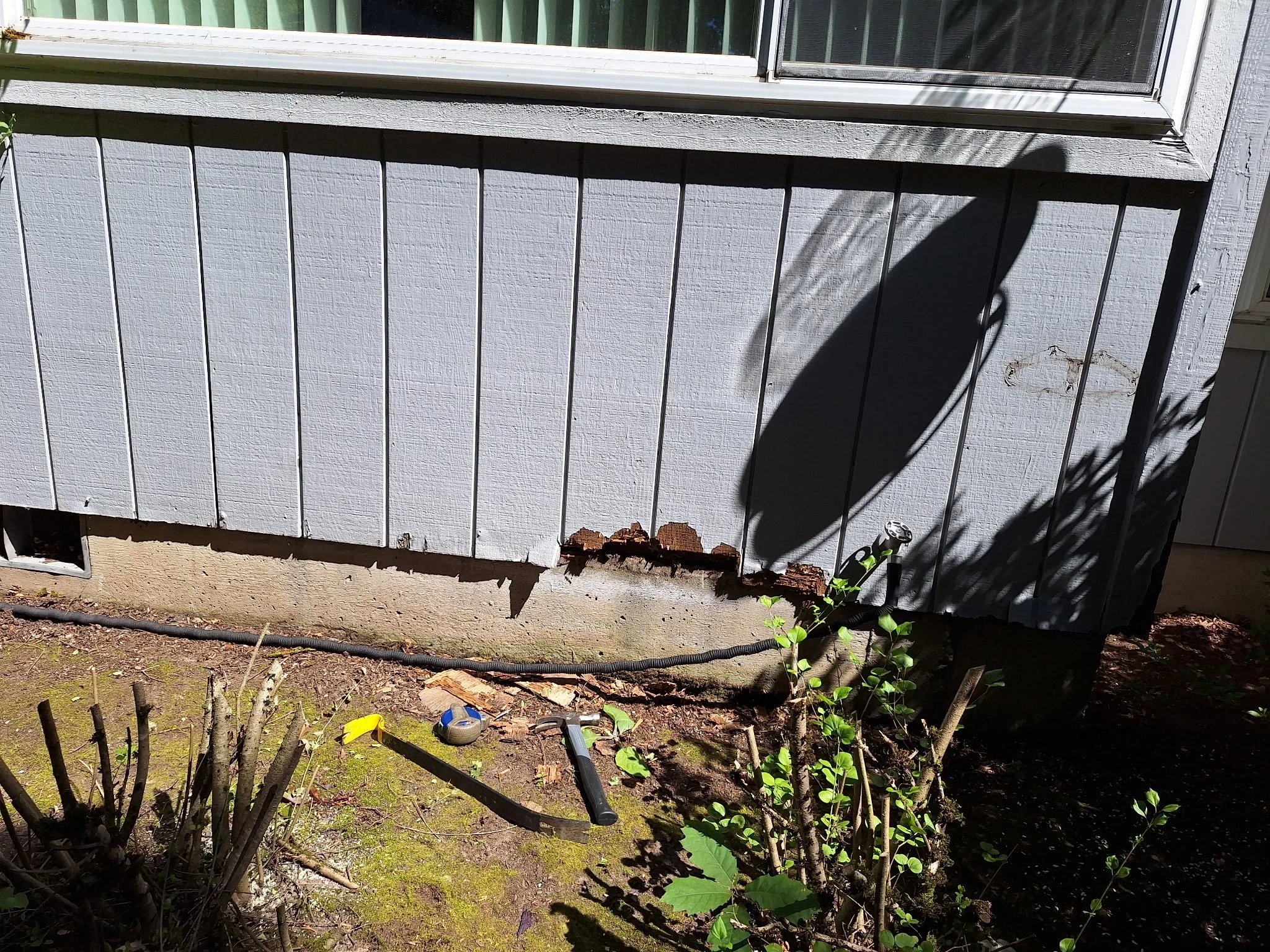
Your home's siding is your first line of defense against Oregon's rain, wind, moisture, and changing temperatures. While siding is designed to withstand the elements, even small areas of damage can allow water to penetrate behind your home's exterior, potentially leading to rot, mold, and costly structural repairs if left unaddressed.
The good news? Most siding problems start with visible warning signs that homeowners can spot early.
1. Cracks, Holes, or Loose Panels
Take a walk around your home a few times each year and look for cracked, chipped, or loose siding panels. Even small openings can allow water and pests to get behind the siding.
Storms, lawn equipment, hail, and normal aging can all cause minor damage that becomes more serious over time.
2. Warping or Buckling
If your siding appears wavy, bowed, or bulging, it may be a sign that moisture has become trapped behind it.
Warping often indicates that the underlying sheathing has absorbed water or that the siding was damaged by prolonged exposure to moisture. Catching this early can prevent much larger repairs later.
3. Soft or Rotten Areas
Wood siding should feel solid—not soft or spongy.
If you can press on an area and it gives way easily, moisture may have already caused wood rot beneath the surface. This is especially common around:
Windows
Doors
Roof intersections
Deck attachments
The bottom edge of siding
These locations are exposed to more water and should be inspected regularly.
4. Peeling Paint or Frequent Repainting
Paint naturally wears over time, but if you're constantly repainting the same sections of your home's exterior, the problem may not be the paint itself.
Moisture trapped behind siding can cause paint to peel, blister, or bubble repeatedly. Rather than simply repainting, it's important to identify and correct the underlying cause.
5. Mold, Mildew, or Algae Growth
Dark streaks, green patches, or mildew growing on your siding may simply be surface dirt—but they can also indicate that moisture is lingering where it shouldn't.
Homes in the Pacific Northwest are especially susceptible due to frequent rainfall and shaded areas that remain damp longer.
If mold continues returning after cleaning, it's worth having the siding inspected.
6. Higher Energy Bills
Damaged siding doesn't just affect your home's appearance.
When siding becomes loose or allows moisture into the wall assembly, insulation can lose effectiveness and outside air can enter the home. This may result in higher heating and cooling costs throughout the year.
If you've noticed rising utility bills without another obvious explanation, your home's exterior could be contributing.
Why Early Repairs Matter
Many homeowners assume siding problems require replacing the entire exterior.
Fortunately, that's often not the case.
When damage is caught early, many issues can be repaired by replacing individual sections, correcting flashing details, resealing vulnerable areas, or addressing moisture intrusion before it spreads.
Waiting too long, however, can allow water to damage sheathing, framing, insulation, and interior finishes—turning a relatively small repair into a much larger project.
Simple Annual Inspection Checklist
At least once each year—and after major storms—walk around your home and look for:
✅ Cracked or broken siding
✅ Loose or missing panels
✅ Warped or buckled sections
✅ Soft or rotten wood
✅ Peeling paint or bubbling finishes
✅ Mold or mildew growth
✅ Gaps around windows and doors
✅ Water stains inside your home near exterior walls
Catching these issues early can save thousands of dollars in future repairs.
Need a Professional Opinion?
If you're unsure whether your siding needs a simple repair or a more extensive solution, we're happy to help.
At Hansen Contracting & Repairs, we provide honest recommendations based on the condition of your home—not a one-size-fits-all approach. Whether it's replacing a few damaged boards, repairing moisture damage, or installing new siding, we'll help you protect your home's exterior for years to come.
Schedule your FREE consultation today.
📞 Call or text 971-491-7250
Sources
U.S. Environmental Protection Agency (EPA). Moisture Control Guidance for Building Design, Construction and Maintenance. Discusses how moisture intrusion can lead to mold growth, wood decay, peeling paint, and other building damage, while recommending routine inspections to identify problems early. https://nepis.epa.gov/Exe/ZyPURL.cgi?Dockey=P100HF07.TXT
This Old House. How To Repair Water-Damaged Siding. Explains common causes of siding water damage, early warning signs, and why prompt repairs help prevent more extensive structural damage. https://www.thisoldhouse.com/siding/how-to-repair-water-damaged-siding
Angi. 8 Signs of Siding Damage You Shouldn't Ignore. Reviews common indicators of failing siding—including cracks, warping, loose panels, and moisture problems—and explains why early repairs are typically less expensive than waiting. https://www.angi.com/articles/signs-siding-problems.htm