
Your kitchen is one of the most frequently used spaces in your home. It's where meals are prepared, families gather, and everyday routines take place. When you're planning a kitchen remodel, the decisions you make early in the process can have a significant impact on how well the finished space looks, functions, and holds up over time.
Whether you're considering a new layout, updated cabinetry, flooring, or a complete kitchen renovation, here are five important things to think about before getting started.
1. How You Use Your Kitchen
Before choosing cabinets, countertops, or flooring, think about how your current kitchen works for your household.
Do you have enough counter space for meal preparation? Is storage easily accessible? Does the layout make it difficult for multiple people to use the kitchen at once?
Consider what you enjoy about your existing kitchen and what you'd like to improve. Identifying these priorities early helps guide the design and ensures the finished space meets your needs.
For example, a household that frequently entertains may benefit from additional seating or an expanded island, while a busy family might prioritize storage, durable surfaces, and better traffic flow.
2. Layout and Functionality
Your kitchen's layout affects everything from meal preparation to how comfortably people move through the space.
When planning a remodel, consider the placement of appliances, cabinetry, work surfaces, and walkways. Even seemingly small layout decisions can influence how convenient and functional your kitchen feels.
Depending on your goals, improvements might include:
Reconfiguring cabinetry to improve storage and accessibility
Creating additional counter or preparation space
Incorporating built-in features or custom carpentry
Improving lighting in frequently used areas
Adjusting the layout to create better flow between rooms
Changes involving plumbing, electrical systems, or structural components may require additional planning and coordination between trades.
3. Flooring and Material Selections
The materials you choose affect both the appearance and long-term performance of your kitchen.
Kitchen flooring, in particular, needs to withstand frequent foot traffic, spills, and everyday wear. Hardwood, luxury vinyl plank, tile, and other flooring options each have different advantages when it comes to durability, maintenance, comfort, and appearance.
It's also important to consider how your flooring will transition into adjacent rooms, especially if you're planning to update multiple areas of your home.
Cabinetry, countertops, backsplashes, and hardware should be selected with the same attention to functionality and durability.
Taking the time to compare materials and understand their maintenance requirements can help you make decisions you'll be happy with for years to come.
4. Your Budget and Priorities
Establishing a realistic budget is an important part of planning any remodeling project.
Kitchen renovation costs can vary considerably depending on the size of the space, materials selected, layout changes, and the amount of work involved.
Replacing cabinetry, relocating plumbing, updating electrical systems, and making structural modifications can all affect the overall cost.
Before beginning your project, identify which improvements are most important to you and where you're willing to invest more.
It's also wise to allow room in your budget for unexpected conditions that may become apparent once work begins, particularly in older homes.
A consultation with a general contractor can help you better understand the scope of your project and the factors that may influence pricing.
5. Planning and Coordinating the Work
A kitchen remodel often involves several different stages of construction, and the order in which work is completed matters.
Depending on the project, the process may involve demolition, carpentry, plumbing, electrical work, flooring, cabinetry, countertops, and finishing details.
Material availability, subcontractor scheduling, inspections, and the condition of existing surfaces can all influence the timeline.
Working with a general contractor provides a central point of contact for coordinating the different aspects of a renovation, helping keep the project organized from the initial consultation through completion.
Planning ahead also gives you time to make important material selections and prepare for how construction may affect your daily routine.
Thoughtful Improvements Make a Difference
Every home and household has different needs, which is why thoughtful planning is such an important part of a successful remodel.
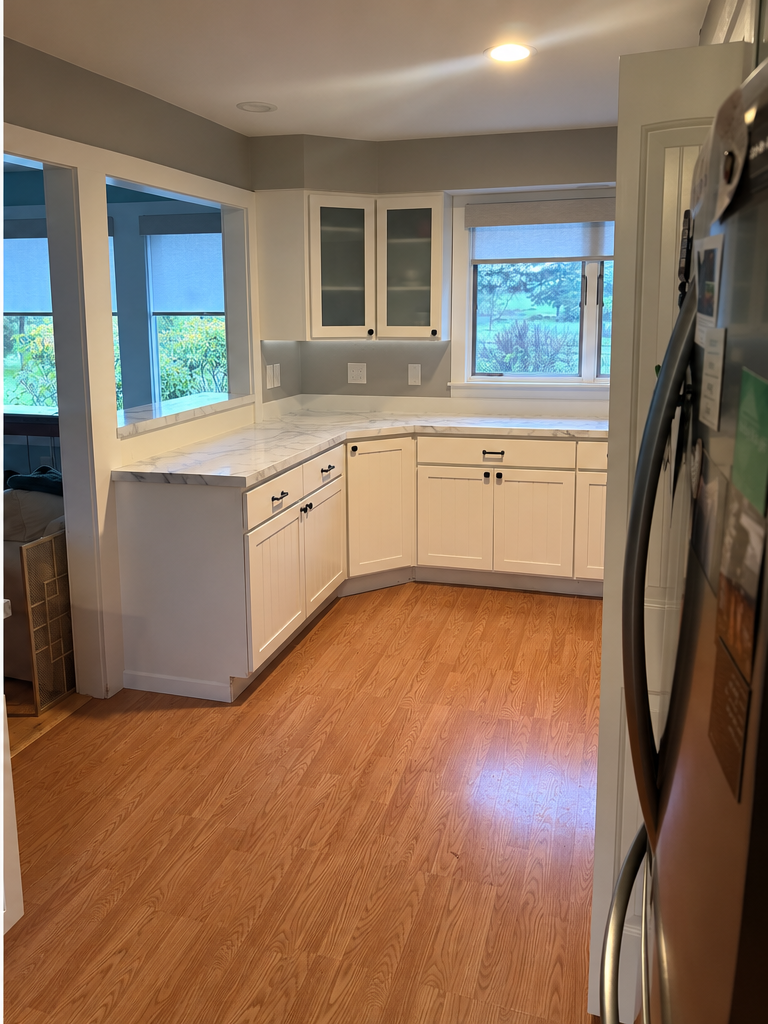
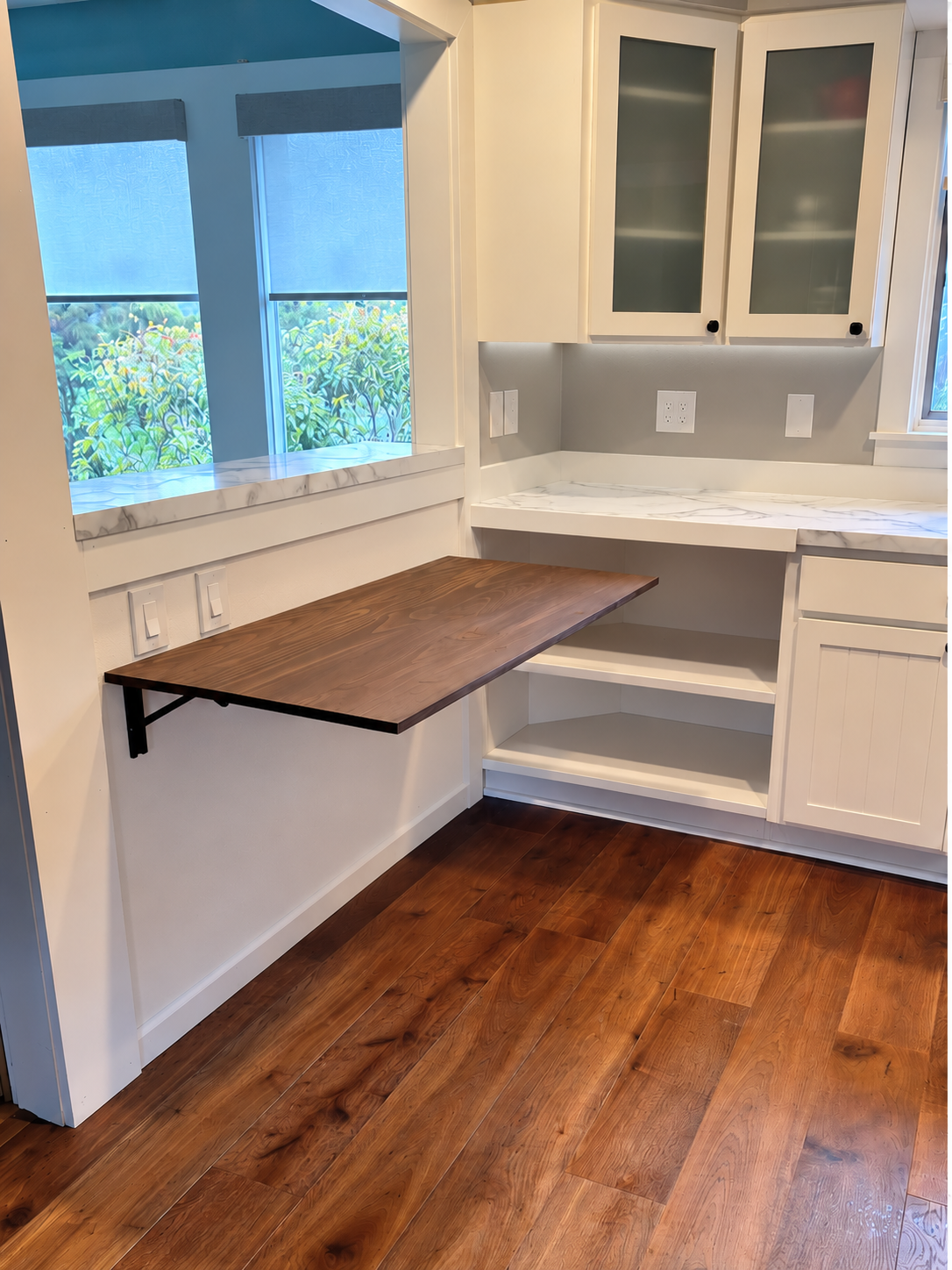
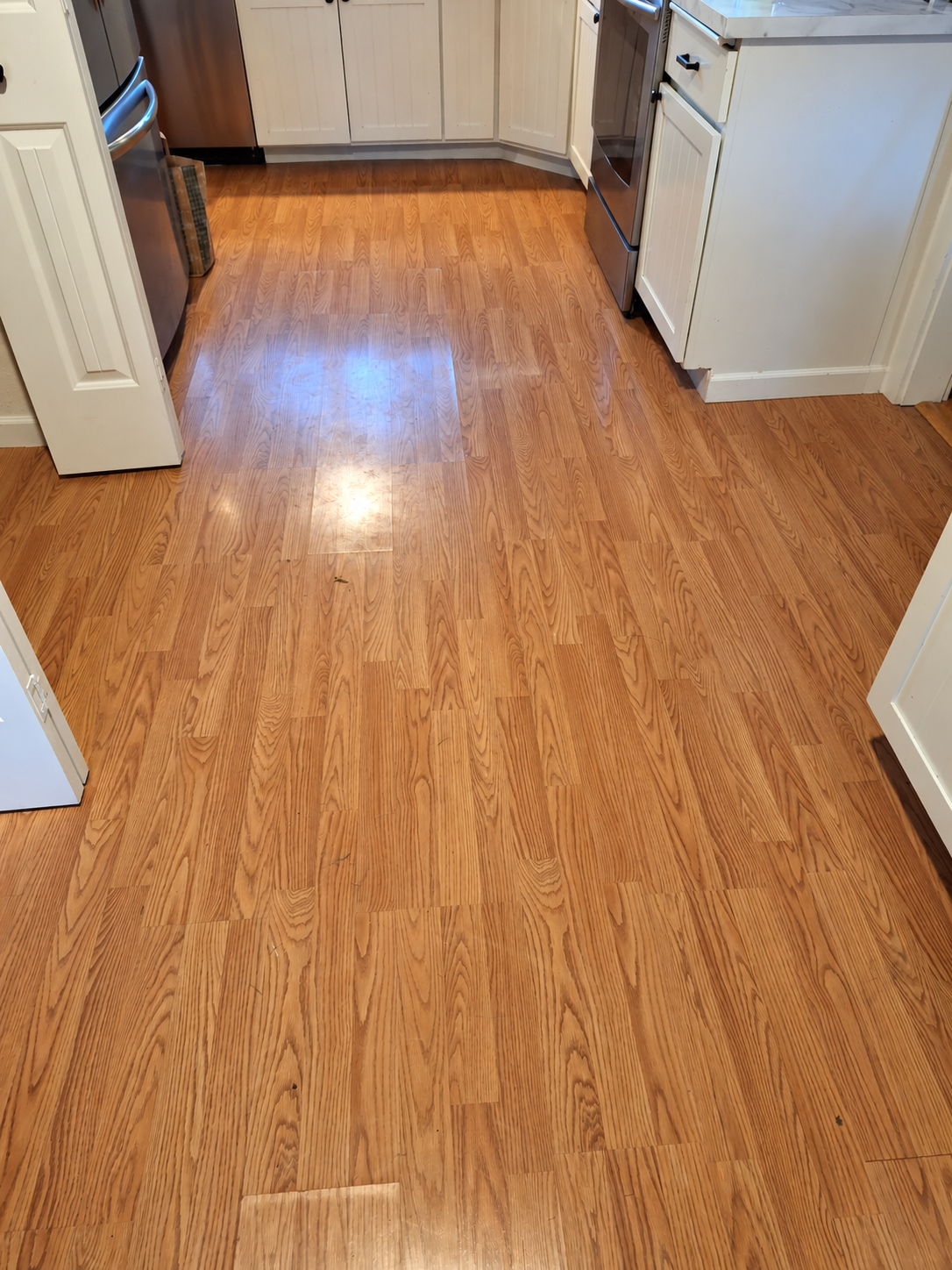
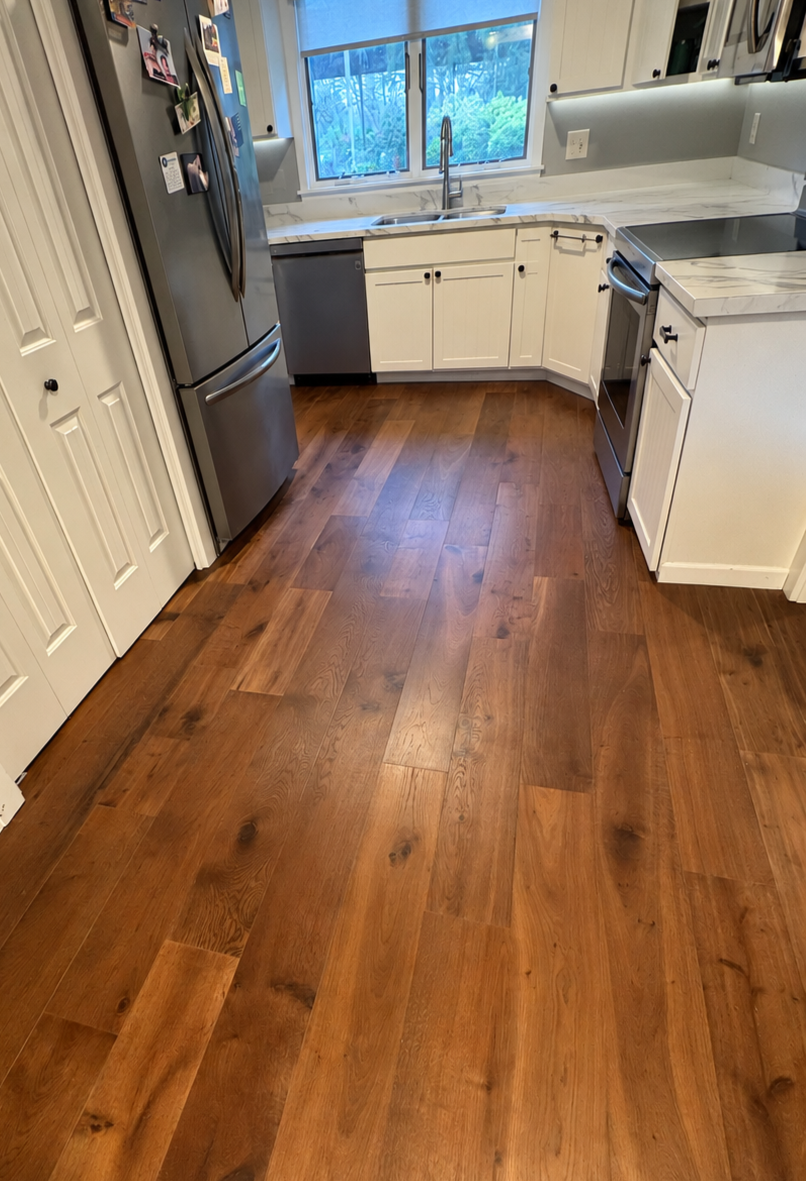
In one of our recent kitchen improvement projects, Hansen Contracting & Repairs installed new flooring, removed existing cabinetry, and built a custom fold-down table to make better use of the available space.
The project is a great example of how flooring, cabinetry modifications, and custom carpentry can work together to improve both the appearance and functionality of a kitchen.
Whether your plans involve targeted improvements or a complete renovation, understanding your goals and priorities is the first step toward creating a space that works for your home.
Planning a Kitchen Remodel?
Hansen Contracting & Repairs provides residential remodeling and renovation services throughout North Plains, Hillsboro, Forest Grove, Banks, Beaverton, and surrounding communities.
From kitchen and bathroom remodeling to flooring, custom carpentry, and whole-home renovations, we work with homeowners to bring their improvement projects to life.
Contact us today to schedule a FREE consultation and estimate.
Hansen Contracting & Repairs, LLC
Licensed • Bonded • Insured
Oregon CCB #256222
www.hansencontractingrepairs.com